
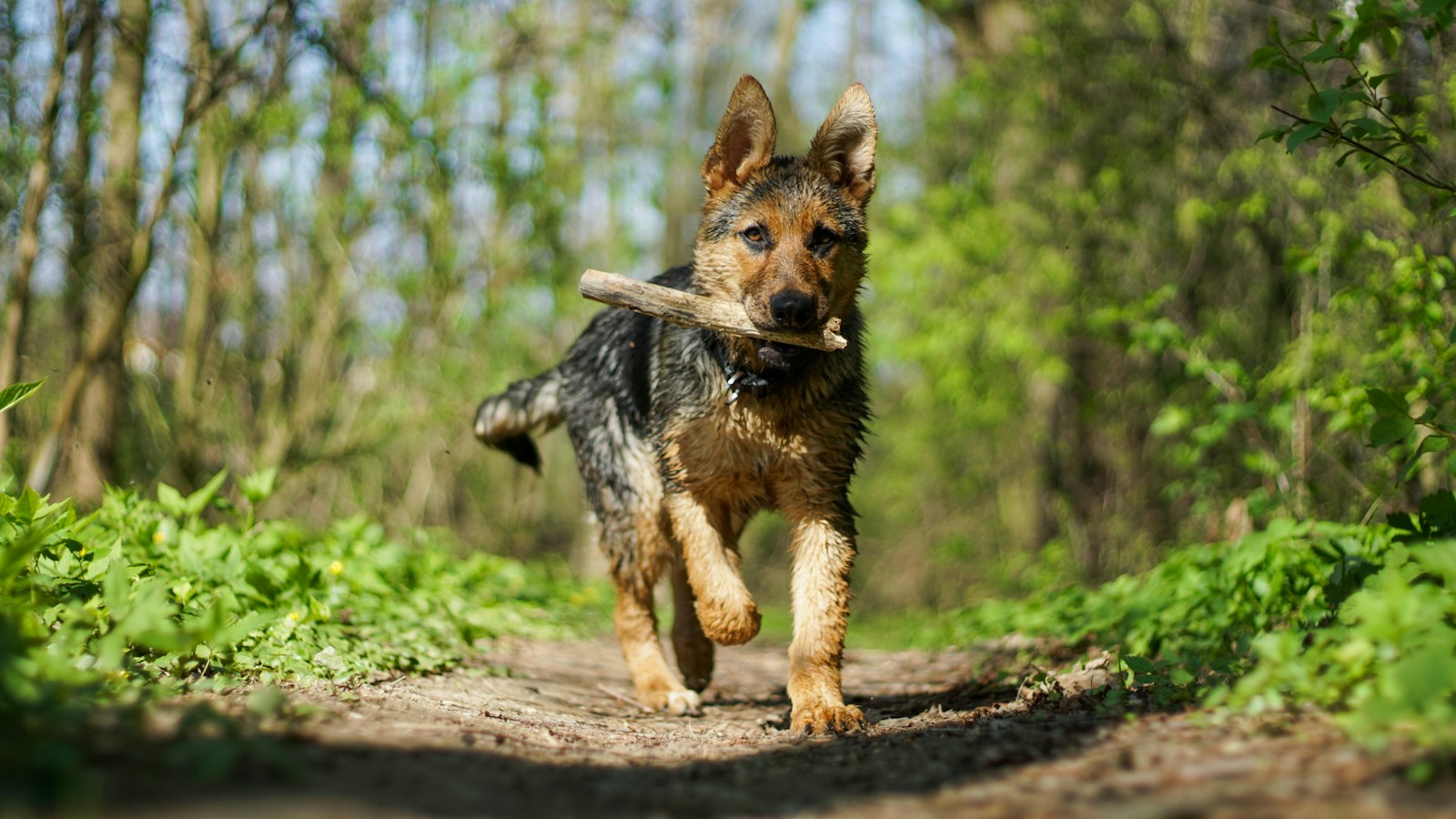
Your dog comes running when you call them at home. Take them to the park, though, and suddenly it’s a different story. There’s a squirrel to chase, another dog to greet, or a smell that’s far more interesting than you.
Getting your dog to come back when you’re holding their favorite treat is one thing. Getting them to return when something far more exciting has their attention is another.
That’s where the real test of recall begins.
We believe reliable recall comes down to more than teaching a command. Your dog needs to understand what you’re asking, have a reason to respond, and learn that ignoring you doesn’t automatically mean they get to carry on doing whatever they want.
So, how do you build recall you can rely on? Let’s unpack it.
Why Does My Dog Ignore Me When I Call?
One of the biggest challenges with recall is that you’re competing with everything happening around your dog. At home, there’s relatively little to distract them. Outside, they’re surrounded by other dogs, unfamiliar smells, people, and wildlife. If returning to you hasn’t been consistently reinforced, those distractions can easily take priority.
Consistency plays a huge role here. If you repeatedly call your dog’s name without getting a response, you’re giving them opportunities to practice ignoring that cue. Over time, it can start to lose its meaning.
There’s also a difference between understanding a command and being able to respond to it in every environment. A dog that comes straight back in the living room hasn’t necessarily learned to do the same at a busy park. That takes practice, with distractions introduced gradually rather than all at once.
Something we see owners doing without realizing it is unintentionally rewarding the very behavior they’re trying to change.
Imagine calling your dog while they’re playing with another dog. They ignore you, carry on playing, and you eventually give up calling. From your dog’s perspective, ignoring you has allowed them to continue doing exactly what they wanted.
This is why we’re so particular about consistency. If your dog learns that ignoring you still gets them access to fun and freedom, that behavior can become more established.
Of course, not every missed recall is deliberate disobedience. A dog might be overwhelmed, fearful, or simply not ready for that level of distraction. Understanding what’s happening matters, particularly if your dog struggles to remain responsive when excited.
Our guide to teaching your dog impulse control explores how everyday training can help dogs pause and respond even when something exciting catches their attention.
How to Train Your Dog to Come When Called
Whether you’re teaching a puppy or working with an older dog that’s developed some bad habits, the foundations are the same. Start somewhere your dog can succeed, find what motivates them, and build up the difficulty.
1. Find What Motivates Your Dog
Before you start training, figure out what actually gets your dog excited.
For some dogs, that’s food. Others would much rather chase a ball, play tug, or have an energetic game with their owner. There’s little point relying on a reward your dog isn’t particularly interested in, especially when you’re competing with the outside world.
We want training to be mentally and physically engaging. Get your dog excited about participating. Use movement, play, and whatever motivates them to make coming back something they genuinely enjoy.
Try different rewards and pay attention to what works. Remember that motivation can change depending on the environment. A treat your dog loves at home might suddenly become much less interesting when another dog is running around nearby.
The more stimulating the environment, the more important it becomes to understand what motivates your dog.
2. Start Somewhere Quiet
Don’t make your first recall session a trip to the busiest dog park in town. Begin indoors or in a secure, quiet space where your dog can concentrate.
Choose a clear recall cue, such as “Come” or “Here,” and use it consistently. You can say your dog’s name first to get their attention, followed by the recall command. For example, “Max, come!”
Start just a few feet away and encourage your dog toward you with an enthusiastic voice or by taking a couple of steps backward. Initially, give the cue when they’re paying attention or are likely to respond, then reward them as soon as they reach you.
Keep sessions short and enjoyable. Once your dog is responding consistently at close range, gradually increase the distance.
We also believe the expectations you establish at home matter. If you routinely call your dog five or six times before they eventually respond, don’t expect that habit to disappear when you get to the park.
Give your cue clearly, create opportunities for your dog to respond successfully, and practice the same expectations throughout everyday life.
3. Make Coming Back Exciting
Think about what you’re asking your dog to do. They’re exploring, sniffing, or playing, and you’re asking them to stop and come back to you.
You need to make that decision worthwhile.
If your dog loves tug, call them over and reward their return with a quick game. If food is their biggest motivator, use a favorite treat. You can also vary rewards with praise, play, or allowing them to continue exploring.
One simple exercise is to practice recall with another person. Stand a short distance apart and take turns calling your dog between you, rewarding them each time they arrive. Keep it lively and engaging so your dog enjoys the exercise.
It’s also important to teach your dog what happens when they reach you. Practice rewarding them close to your body and gently handling their collar or harness before releasing them again. You don’t want a dog that runs toward you but dodges your hand every time you try to attach their leash.
The aim is for your dog to associate returning to you with something positive, rather than seeing it as the end of the fun.
4. Gradually Introduce Distractions
Once your dog understands recall in a quiet environment, start practicing outside. A secure backyard or quiet open space is a good place to begin before progressing to busier surroundings.
The key is to increase the difficulty gradually. For example, if another dog is visible in the distance, see whether yours can still respond to their recall cue. As they become more reliable, you can practice at closer distances or around different distractions.
This is where we believe the difference between teaching recall and developing reliable recall becomes clear.
It’s relatively straightforward to motivate a dog when there’s nothing else happening. The bigger challenge comes when they spot another dog, squirrel, or person they’d much rather investigate.
If your dog can’t respond, they may not be ready for that level of distraction. Create more distance, return to an easier exercise, and build back up.
Don’t rush from a quiet living room to a crowded dog park and expect the same response. Reliability develops through practice in increasingly challenging situations.
5. Build Recall Into Everyday Life
Recall shouldn’t be something you only practice during dedicated training sessions. Your dog has opportunities to respond to you throughout the day, and those everyday moments are part of their training.
Practice at home, in your backyard, and during walks when you can manage the environment safely. Vary your rewards, occasionally making their return especially worthwhile with a favorite toy or high-value treat.
Building recall into your dog’s daily routine makes it easier to practice consistently. Short, regular sessions give your dog opportunities to respond in everyday situations. For more on how structure and consistency shape behavior, read our guide to the importance of routine for dogs.
This is also where we believe clear boundaries become important. Rewards play a significant role in teaching recall, but our approach doesn’t stop there.
We want dogs to understand that responding to a learned command matters, even when something else is more exciting. That means being consistent about what happens when they respond and how much freedom they’re given when they’re not yet reliable.
The goal isn’t to remove your dog’s enjoyment of walks or playtime. It’s to build enough trust and communication that you’re comfortable giving them more freedom.
Why a Long Line Is Important for Recall Training
A long line is one of the tools we recommend when teaching recall, particularly when you’re starting to practice outdoors.
It allows your dog room to explore while giving you a way to manage their freedom before they’re ready to go off-leash.
We often recommend a 50-foot long line, although shorter options, such as 15 or 20 feet, can be easier to manage when you’re starting out. The right length depends on your dog, your experience, and the environment.
Attach the line to a well-fitting harness and practice in an open space away from roads and other hazards. Manage the excess line carefully, avoid wrapping it around your hands, and don’t let your dog run at speed into the end of it.
Within our training approach, a long line isn’t just about preventing a dog from running away. It allows us to manage access to the environment rather than repeatedly calling a dog that’s too distracted to respond.
If your dog ignores your first recall cue, you can safely prevent them from continuing to run off or reach whatever has their attention. Avoid jerking or dragging them back, and move to a position where you can regain control calmly.
As their recall improves, you can gradually give them more opportunities to explore.
Recall and leash manners are both important parts of building better communication with your dog. If your dog also struggles with pulling during walks, our guide to stopping your dog from pulling on the leash explains how to work on that behavior.
What Happens When Your Dog Ignores Your Recall?
This is where our approach differs from some other training methods.
If you call your dog once and they ignore you, don’t stand there repeating yourself. Every time you call without getting a response and then allow your dog to carry on doing exactly what they want, you risk reinforcing that pattern.
Think about a dog that spots another dog across the park. You call them, they ignore you, and they run over to play anyway. They’ve just gained access to something they wanted despite not responding to you.
We don’t want that to become the pattern.
Our approach is that if a dog ignores a recall cue they’ve already learned, they don’t automatically get to carry on enjoying the same freedom.
When working on a long line, we bring the dog safely back under control and temporarily pause their access to exploring or playing. Once they’re calm and ready to engage again, we return to training.
We also use a structured reset in some training situations, including a short period on-leash before giving the dog another opportunity to respond.
The principle is simple: freedom comes with responsibility.
We don’t believe that teaching recall is only about offering a reward and hoping your dog chooses it over everything else. We believe there should also be clear, predictable boundaries around access to the things your dog enjoys.
That doesn’t mean becoming angry, repeatedly shouting commands, or physically punishing your dog when they return. We want calm, consistent communication.
It’s also important to recognize when your dog is genuinely struggling with an environment. A dog that’s fearful, overwhelmed, or hasn’t properly learned the cue needs the training adjusted, not simply a consequence for failing.
The aim is to teach your dog that listening matters while continuing to build their confidence and willingness to come back.
When Is Your Dog Ready to Go Off-Leash?
We regularly work with groups of dogs off-leash, but that level of freedom depends on training, management, and understanding the individual dogs.
Having a dog that returns for a treat in your backyard doesn’t automatically mean they’re ready to run freely around a busy park.
Before considering off-leash walks, ask yourself:
- Does my dog come back promptly when called in quiet environments?
- Can they respond around other dogs, people, and unfamiliar smells?
- Will they return when they’re already busy exploring?
- Have they practiced successfully on a long line in different locations?
If your dog is still struggling in these situations, continue building their recall before removing the leash.
Our philosophy is that the more consistently a dog responds, the more freedom we’re comfortable giving them. If that reliability isn’t there yet, we manage their freedom while continuing to train.
Even well-trained dogs can become distracted, and no recall is guaranteed in every situation. Always follow local leash laws, respect wildlife and other park users, and avoid off-leash activity near roads or other hazards.
A long line can still give your dog plenty of space to explore while you’re working toward greater reliability.
Frequently Asked Questions About Dog Recall Training
How Long Does It Take to Train a Dog to Come When Called?
There’s no fixed timeline. Some dogs learn the basics quickly, but building reliable recall around distractions takes ongoing practice.
Your dog’s age, previous training, motivation, and environment all affect how quickly they progress. Focus on developing a consistent response in different situations rather than expecting perfect recall after a certain number of sessions.
Can You Teach an Older Dog Reliable Recall?
Yes. Older dogs can learn recall, even if they’ve spent years responding inconsistently.
If your dog has a long history of ignoring a particular command, introducing a new cue can sometimes help you build a fresh association. Start with simple exercises and gradually increase the difficulty, just as you would with a younger dog.
Should I Always Use Treats for Recall Training?
Not necessarily. Food can be a useful training tool, particularly when introducing recall, but it’s not the only way to motivate your dog.
Toys, games, praise, and opportunities to explore can all be rewarding. We also believe dogs benefit from clear boundaries and consistent expectations alongside reward-based learning.
The aim isn’t to have a dog that only listens when they can see a treat in your hand. It’s to develop reliable communication across everyday situations.
Build Better Recall With Cherry Hoggs
Getting your dog to come back when there’s nothing else happening is one thing. Getting them to return when they’re surrounded by distractions is where your training is really tested.
Start by building motivation and teaching a clear recall cue. Practice consistently, increase the distractions gradually, and don’t allow repeated missed recalls to become part of your routine.
For us, reliable recall isn’t about restricting your dog’s freedom. It’s about creating the communication and consistency that allow you to give them more of it.
Want to take your dog’s training further?
Our Cherry Hoggs Dog Training eBook takes a deeper look at our philosophy, including recall, leash etiquette, behavior, and the principles behind clear communication and consistent boundaries.