
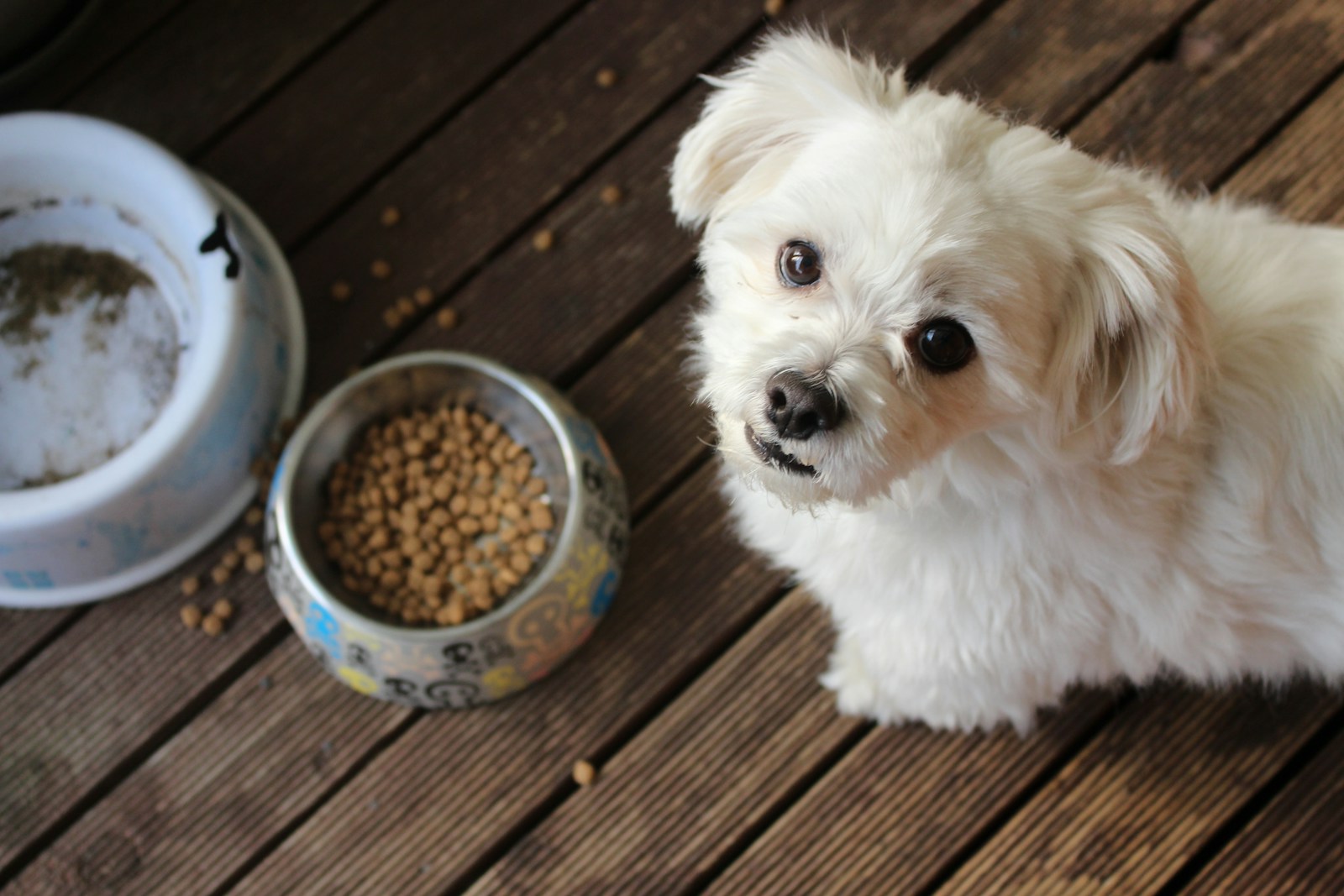
Impulse control is one of those things you don’t think much about until your dog completely loses theirs. A door opens, food hits the floor, another dog appears or something exciting catches their attention, and suddenly everything else seems to disappear.
At Cherry Hoggs, we see impulse control as an essential life skill. It teaches your dog that wanting to do something doesn’t mean they have to act on that urge immediately. They can pause, listen and respond to you, even when there’s something far more interesting competing for their attention.
That ability carries over into almost every part of everyday life, from waiting at an open door and staying calm around food to better leash manners, greetings and responsiveness around other dogs.
What is impulse control in dogs?
Impulse control is your dog’s ability to pause rather than immediately acting on an urge.
There’s an important difference between a dog knowing a command and being able to follow that command when something more exciting is happening.
Your dog might have a beautiful sit and wait in your living room. That’s a good start, but can they hold that sit and wait when the front door opens? When their dinner is on the floor? When someone walks past? When another dog is nearby?
That’s where impulse control really starts to matter. The aim isn’t to remove your dog’s instincts or personality. You’re teaching them that feeling an urge doesn’t mean they automatically have to act on it.
Why does impulse control matter?
Safety is one of the biggest reasons. A dog that has learned to wait rather than automatically rushing through an open door, jumping out of the car or chasing something they see is much easier to keep safe.
But it goes further than that. Impulse control training teaches your dog to remain responsive when the environment becomes more stimulating. That can support everything from calmer greetings and better leash manners to managing excitement around other dogs.
For example, if your dog sees another dog and immediately drags you across the street to reach them, there’s very little opportunity for you to communicate. Teaching them to pause and respond to you gives you something to work with.
We talk more about how repeated pulling can become a learned behavior in How to Stop Your Dog Pulling on the Leash: Why It Happens and How to Fix It.
Impulse control can also be useful when working on behaviors such as excessive barking or jumping up, particularly where excitement and a lack of boundaries are contributing to the problem.
It isn’t, however, the explanation for every behavioral issue. Fear, anxiety, previous experiences, pain, frustration and other factors can all influence behavior too. Impulse control is one part of the bigger training picture.
Start with sit and wait
One of our favorite exercises for teaching impulse control is also one of the simplest: sit and wait.
The expectation is straightforward. Hold this position until you’re released.
When you’re first teaching it, you don’t immediately take your dog into the busiest park you can find and expect perfection. Start somewhere with very little going on.
Your living room is perfectly fine. Ask your dog to sit and give your wait command. Begin by creating a small amount of distance between you. Your dog may immediately get up to follow you.
If they do, calmly put them back into position.
No big reaction. No frustration. No turning it into a conversation.
Reset them and try again.
At first, you might only get a couple of seconds. That’s fine. What matters is that the expectation stays consistent.
As they begin to understand what you’re asking, gradually increase how long they wait and how far you can move away.
Don’t stay in the easy environment
This is where a lot of owners get caught out. Your dog can wait perfectly in the kitchen, so you assume they’ve nailed it.
Then you try exactly the same thing outside with another dog walking past and suddenly it’s as though the word “wait” has lost all meaning.
That’s normal. The environment has changed dramatically.
Once your dog understands the command in a low-stimulation environment, start gradually increasing the difficulty.
A progression could look something like this:
Level 1: Quiet room in the house
Level 2: Yard or another familiar outdoor space
Level 3: Food nearby, a door opening or another controlled distraction
Level 4: Quiet street or park
Level 5: People, dogs or other distractions at a manageable distance
Level 6: Higher-intensity real-life environments with multiple distractions
Don’t rush from level one to level six because the first session went brilliantly.
You also don’t need to make everything harder at once. If you’re introducing a much bigger distraction, you might shorten the duration of the wait or stay closer to your dog initially.
Let them succeed at one level before expecting more.
The goal is eventually to have a dog that understands that the expectation doesn’t disappear just because the environment becomes more exciting.
What should you do when your dog breaks the wait?
Calmly reset them. That’s it.
If your dog breaks position, calmly return them to where they were and repeat the exercise. Do it as many times as necessary.
We don’t think this needs anger, frustration or a dramatic reaction from the owner. The important part is the consistency.
If your dog learns that breaking the wait eventually causes you to give up, they’ve also learned something: persistence works.
The consequence isn’t anger. It’s simply that breaking the boundary doesn’t make the boundary disappear.
This is part of a much wider Cherry Hoggs principle. Dogs need clear communication and predictable consequences. We explain that philosophy in more detail in The Five Core Principles of Effective Dog Training.
Do you need treats to teach impulse control?
This is one area where our approach may differ from other trainers.
We don’t believe you need to give your dog a treat every time they perform an expected behavior.
Treats can be a useful training tool, but they aren’t the only way to reinforce behavior. Rewards can also include things like play, attention and access to things your dog values. We don’t want to create a situation where your dog needs to see food before deciding whether listening to you is worthwhile.
If you have to reach into a treat pouch every single time you ask your dog to wait, what happens when you don’t have one?
Instead, we like to reinforce training through structure and through things the dog already values.
Food. Play. Attention. Exercise. Access to the environment. Freedom. Your dog wants these things anyway, which gives you plenty of opportunities to teach that appropriate behavior can give them access to what they want.
Take dinner as an example. We may ask a dog to sit and wait while their food is put down. Even with the bowl directly in front of them, they’re expected to hold position until they’re released to eat.
Food is extremely valuable to most dogs. That’s exactly what makes it such a useful opportunity to practice self-control. If they lunge toward the bowl before being released, we reset them rather than immediately giving them access to the food.
We’ve discussed this same principle in our guide to Resource Guarding in Dogs, where we explain why wanting something doesn’t have to mean immediately acting on that impulse.
Use everyday life to practice impulse control
You don’t need to announce that it’s time for an “impulse-control training session.”
Your dog gets opportunities to practice it all day. Before dinner, can they wait to be released?
When the front door opens, do they immediately charge through it or wait for direction?
If somebody walks into your home, can your dog listen to you before launching themselves at your guest? If greetings are a problem for your dog, we cover this in more detail in How to Stop a Dog Jumping Up at People.
During play, can your dog become excited and still stop or wait when asked? On a walk, can they see something interesting without assuming they automatically get to pull you toward it?
The more consistently you apply these expectations to everyday situations, the less impulse control becomes a party trick your dog performs during a training session, and the more it becomes part of how they behave.
This is also where routine and consistency become important. The rules can’t completely change depending on who’s walking the dog, what mood you’re in, or whether you’re in a rush.
That doesn’t mean your dog’s entire day needs to run like a military timetable. It means the important expectations remain predictable. We go into that distinction in How Important Is Routine For Your Dog?
Set your dog up to succeed
Impulse control is difficult. You’re asking your dog not to do something they really want to do, sometimes while they’re surrounded by stimulation.
So, think about the state your dog is in before you ask for their most difficult work. If they’ve been indoors all day and are bursting with unused energy, expecting them to immediately perform a long wait around dogs, squirrels and people is making the job considerably harder.
We like our dogs to have an opportunity for appropriate physical and mental stimulation before more challenging training. That might mean walking, sniffing, playing, training, using a long line or safe off-leash exercise where appropriate for the individual dog and environment.
For some dogs, a quick walk around the block isn’t going to take the edge off. However, don’t mistake exhaustion for training.
The aim isn’t to completely wear your dog out until they’re too tired to do anything wrong. Ultimately, you want a dog capable of listening to you when they’re excited and energetic too.
Exercise can put them in a better position to learn. It doesn’t replace the learning.
Common mistakes when teaching impulse control
Only practicing at home. A dog that can wait in a silent kitchen still needs to learn how to respond when the world gets more interesting.
Increasing the difficulty too quickly. Build distractions gradually instead of repeatedly putting your dog in situations they’re not ready to handle.
Being inconsistent. If breaking the wait is corrected sometimes and ignored at other times, the boundary becomes unclear.
Repeating the command. Saying “wait, wait, wait, wait” teaches your dog that the first one didn’t matter very much. Give the command, then follow through on it.
Getting frustrated. Your dog breaking position isn’t a personal insult. Reset them and carry on.
Bribing instead of teaching. We want the dog to understand the expectation, not simply stare at your hand waiting to see what payment is on offer.
Only using impulse control during formal training. The real value comes when the same principles are reinforced throughout everyday life.
Giving freedom regardless of behavior. If rushing, pulling or ignoring you still gets the dog exactly what they wanted, there’s very little reason for that behavior to change.
Impulse control isn’t about removing excitement
We don’t want dogs that are frightened to move or have had every ounce of personality trained out of them. Dogs should play, run, explore, and get excited. What we want is a dog that can be excited and still respond to you.
There’s a big difference between trying to suppress your dog’s energy and teaching them how to regulate their behavior when that energy is high.
A dog charging around playing with its friends should still understand that your mark means something. A dog desperate to get out for their walk can still wait rather than barging through the door. A dog can want their dinner without throwing themselves face-first into the bowl before you’ve put it down.
Excitement isn’t the enemy. Losing all communication with your dog whenever they become excited is the problem.
Impulse control should give your dog more freedom, not less
Rules and boundaries sometimes get mistaken for restricting a dog’s life. We see it differently. The more we can trust a dog to listen, the more freedom we’re comfortable giving them.
Think about an open car door. If you know your dog will hold position until they’re released, you don’t need to panic every time you open it.
If your dog can remain responsive around distractions, you may be able to safely give them more opportunities to explore.
If they can get excited during play and still listen when asked to stop, you can feel much more comfortable letting them enjoy themselves.
Good impulse control isn’t about controlling every second of your dog’s day; it’s about building enough trust that you don’t have to.
When impulse control isn’t the whole problem
We believe many dog training problems overlap. A dog that ignores every boundary, can’t disengage from things it wants and rarely responds to its owner is going to be much harder to work with when another behavioral problem appears.
Within our approach, this is where respect for the owner’s communication matters. When we talk about respect, we don’t mean making a dog frightened of you. We mean having a relationship where your dog understands that your mark and boundaries matter the first time, rather than deciding after the second, third or fourth request whether they’d like to listen.
It’s equally important not to assume every difficult behavior is simply a lack of respect or impulse control. Reactivity can involve excitement and frustration, but it can also involve fear or previous experiences. Aggression can have multiple causes. A dog struggling when left alone may be experiencing genuine distress rather than simply choosing not to follow a rule.
If being left alone is the problem, read Does Your Dog Have Separation Anxiety? Signs, Causes & How to Help, where we look at separation related behavior in more detail.
Impulse control can give you an important training foundation, but sometimes you need to address what’s driving the individual behavior too.
Final thoughts
Impulse control isn’t built from one impressive sit and wait in your living room.
It’s built through hundreds of ordinary moments where your dog learns that wanting something doesn’t mean immediately getting it.
Start somewhere easy. Make the challenge harder gradually. If your dog breaks the boundary, calmly reset them. Most importantly, be consistent enough that your dog always knows what is expected.
The aim isn’t a dog with less fun or freedom. It’s a dog you can trust with more of both.
If you want to understand the wider training system behind the way we communicate, set boundaries and build reliable behavior, our Dog Training ebook takes you much deeper into the Cherry Hoggs approach. It includes step-by-step training guidance, behavioral insights and videos to help you put the principles into practice with your own dog.