
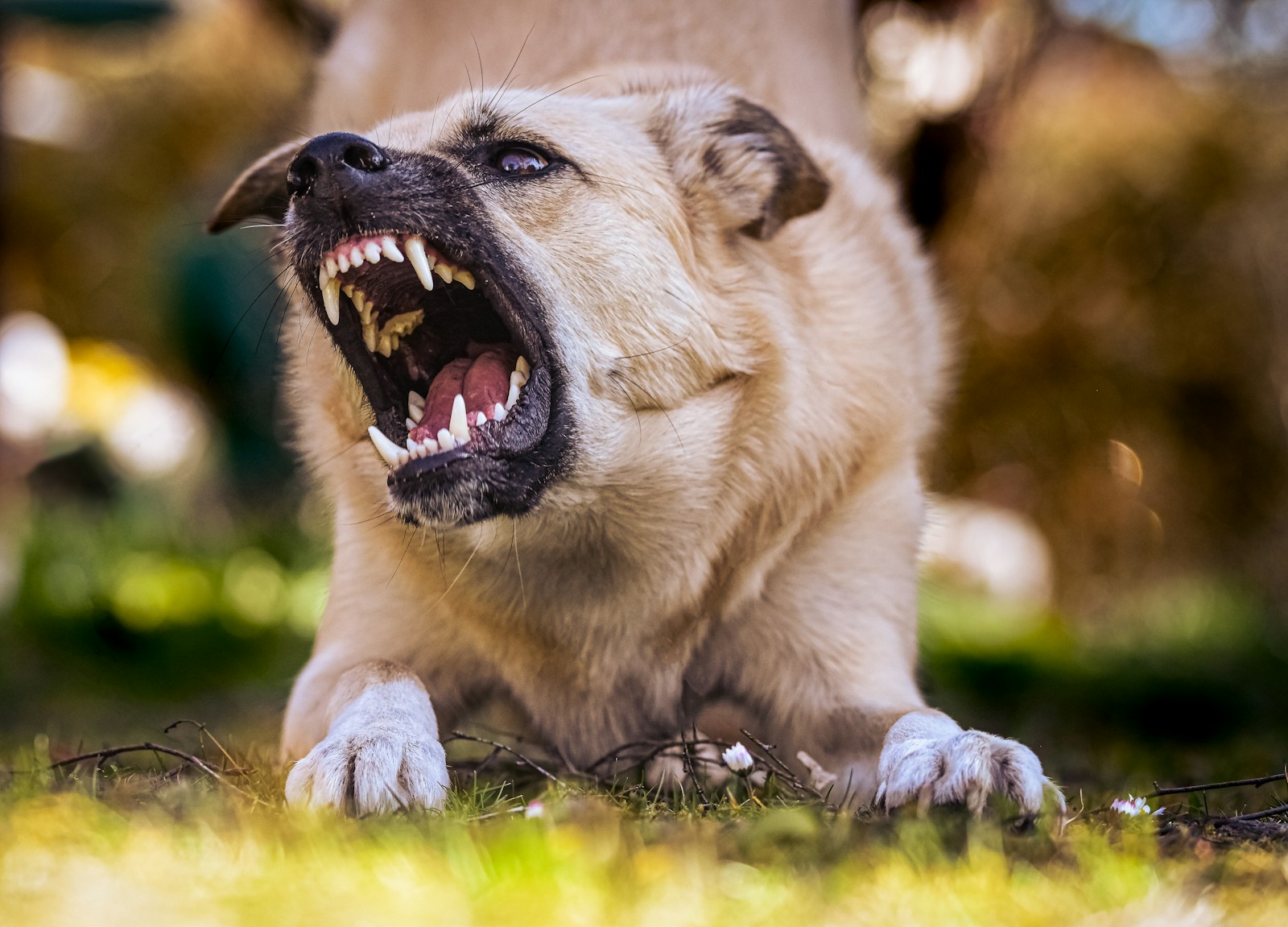
Resource guarding is one of those dog behaviors that can be easy to brush off at first. Maybe your dog stiffens over their food, growls when you go near a bone or suddenly becomes very protective of a favorite toy. But if it starts escalating, resource guarding can become a serious problem for both people and other dogs.
Put simply, resource guarding is when a dog tries to keep control of something they value. Food is a common one, but dogs can also guard toys, beds, spaces and even people.
It might be natural behavior, but “they’re just being a dog” isn’t a good enough reason to ignore it. Dogs live in our world, and they need to learn how to behave safely within it.
In this guide, we’ll look at why dogs resource guard, the signs to watch for and how to stop resource guarding from becoming a bigger problem.
What is resource guarding in dogs?
Resource guarding is when a dog becomes defensive over something they value and tries to prevent another person or animal from approaching, touching or taking it.
Food is probably the first thing that comes to mind, but dogs can resource guard all sorts of things:
- Food and food bowls
- Bones, chews and treats
- Toys
- Stolen objects
- Beds and resting spots
- Areas of the home
- People and attention
Some dogs only guard particularly high-value items. Others might guard several different resources.
One thing to bear in mind is that it doesn’t always look dramatic. A dog doesn’t have to be snarling over their dinner for resource guarding to be happening.
Signs of resource guarding in dogs
One of the biggest mistakes owners make is waiting for a growl or bite before realizing there’s a problem. Dogs will often show much quieter signs first.
Common signs of resource guarding in dogs include:
- Freezing or suddenly becoming very still when someone approaches
- Stiffening their body or lowering their head over an item
- Eating faster when somebody comes near
- Moving food, toys or chews away
- Hovering over or blocking access to something
- Giving a hard stare or closely watching someone’s movements
- Growling, snarling or lifting the lip
- Snapping or lunging
- Biting when somebody approaches or tries to take the resource
Pay attention to those early signs. By the time a dog is growling, they may already have been showing you that they aren’t comfortable with what’s happening, so you can take action before it goes too far.
Why do dogs resource guard?
There isn’t one single reason why dogs resource guard. It can come down to instinct, previous experiences, competition and simply how valuable something is to that particular dog.
Resource guarding is a natural behavior. In the wild, resources such as food are limited, so protecting what you have makes sense. That instinct doesn’t disappear just because a dog now lives in a home. However, we don’t think “it’s natural” is a reason to accept dangerous behavior. Dogs still need to learn how to live safely in our world.
The value of the resource matters too. Your dog might happily give up a tennis ball but behave very differently over a bone. The more they want something, the stronger their motivation to keep hold of it can be.
Experience can also shape the behavior. If a dog learns that people approaching means something valuable is about to be taken away, they may become more protective. Equally, if growling repeatedly makes people back off, they’ve learned that growling works. Competition with other dogs can make guarding more likely too.
Every dog is different, so temperament, impulse control, stress and previous experiences can all play a part.
If resource guarding suddenly starts in a dog that has never shown it before, look at what has changed. Pain or illness can also affect behavior, so an unexplained change is worth discussing with your vet.
How to stop resource guarding in dogs
Resource guarding can often be significantly improved with consistent training, but the approach needs to match the dog and the severity of the behavior.
At Cherry Hoggs, our aim is simple: clear communication, clear expectations and a dog that understands how they are expected to behave around things they value.
Start with structure and impulse control
We don’t believe dogs need unlimited access to everything they value whenever they want it. Food is an easy place to start.
We prefer structured mealtimes rather than leaving food available all day. Ask your dog to sit and wait while their food is prepared and put down, then release them to eat.
It sounds simple, but you’re teaching something important: wanting something doesn’t mean immediately acting on that impulse.
The same thinking applies outside mealtimes. Clear routines and consistent boundaries help your dog understand what’s expected and when access to something is available.
We talk more about why this matters in How Important Is Routine for Dogs?
Make the consequences clear
Dogs need consistency. Something can’t be unacceptable one day and ignored the next because you can’t be bothered to deal with it.
A big part of the Cherry Hoggs approach is creating a clear relationship between behavior and consequence. Appropriate behavior allows access. Inappropriate behavior can mean that access ends.
If a dog lunges for its bowl rather than waiting, for example, we reset them and try again instead of rewarding the behavior by immediately giving them the food.
When we’re working directly with resource guarding in a controlled training environment, we may also use removal and return of a resource as part of that communication. The aim is for the dog to learn that guarding doesn’t give them control of the situation.
This sits within our wider fun, freedom and food principle. These are all things dogs value, which makes them useful tools when communicating consequences and rewarding the behavior we want.
We go into this properly in The Five Core Principles of Effective Dog Training.
Train the whole dog
Don’t spend all your time hovering around the food bowl.
Resource guarding might be the behavior you’re trying to change, but the rest of your dog’s training still matters.
Can they wait? Leave something when asked? Settle? Walk past something exciting without immediately acting on the impulse? Do they understand boundaries? Are the rules actually consistent?
Exercise, routine, confidence, structure and impulse control don’t individually “cure” resource guarding. But improving those foundations gives you a much better dog to work with.
Know when not to do it yourself
A dog becoming tense over a toy is very different from a dog prepared to seriously bite over its food.
When we work with severe resource guarding, we use controlled setups and appropriate safety equipment. Depending on the dog, that can include a properly introduced muzzle.
There’s no shame in using a muzzle. There’s also no prize for getting bitten because you wanted to prove you didn’t need one.
If you genuinely don’t feel safe around your dog when they have a resource, get experienced professional help rather than experimenting.
Want the full Cherry Hoggs training system? Our Dog Training eBook covers the foundations behind better behavior, from boundaries and communication to impulse control.
Should you take food or toys away from a resource-guarding dog?
This is an area where dog trainers don’t all agree.
Our end goal at Cherry Hoggs is clear: you should be able to ask your dog to give something up without being threatened for doing it.
That matters in the real world. Your dog could pick up something dangerous, steal food they shouldn’t eat or have something another dog is trying to get.
Giving your dog a bone also doesn’t mean you’ve signed over legal ownership of the bone until further notice.
With dogs we’ve assessed and are working with safely, we may practice structured removal and return of resources. The aim is to teach the dog that guarding doesn’t give them permanent control of something, while calm, appropriate behavior allows access.
Not everybody approaches resource guarding this way.
Dogs Trust and the ASPCA, for example, advise against simply taking something from a dog while they are actively guarding it. Their concern is that repeatedly losing valued items can make some dogs more worried about people approaching and increase their motivation to guard.
That difference is worth being clear about.
Our goal is still a dog that can reliably relinquish something when asked. What we don’t recommend is walking up to a dog that is already snarling over a bone and sticking your hand in to prove a point.
There’s a big difference between a controlled training exercise with a dog that has been assessed and confronting an aggressive dog when you don’t know how they’ll respond.
The goal is to train the dog, not win a showdown over dinner.
Resource guarding between dogs
Resource guarding doesn’t only happen between dogs and humans.
A dog might be perfectly relaxed when you approach their bowl but completely change when another dog comes near. Food, water, toys, chews, resting spots and even access to a person can all become things dogs compete over.
We regularly walk groups of around 40 dogs. When they stop for a drink, we don’t pull 40 individual water bowls out of a huge suitcase. Several dogs can drink from a smaller number of bowls because they’ve learned the expectations around those resources.
That’s the result of structure and training.
It doesn’t mean you should take two dogs that already fight over food, stick one bowl between them and tell them to crack on.
If there’s a genuine risk of aggression between dogs, manage that risk first. Give them space and control access to things that are likely to cause conflict while you work on the behavior.
Resource guarding can be one trigger for fights between dogs. If that’s something you’re dealing with, read our guide to why dogs fight and how to prevent it.
When does resource guarding need professional help?
Resource guarding exists on a scale. A dog quietly moving a toy away from you isn’t the same as a dog prepared to bite somebody over their dinner.
We’d recommend getting experienced professional help if your dog:
- Has bitten or attempted to bite over a resource
- Regularly snaps or lunges when somebody approaches
- Guards several different resources
- Guards people or areas of the home
- Fights with other dogs over resources
- Behaves unpredictably around food or possessions
- Lives with children who could accidentally approach something being guarded
Children need particular caution. They’re less likely to recognize the warning signs a dog is giving and more likely to approach food, toys or dogs unpredictably.
If resource guarding appears suddenly in a dog with no previous history of it, speak to your vet too. There may be more going on than training alone.
If you feel like you need some help, Charlie offers in-person and virtual consultations. You cannot ignore the problem, you have to resolve it as soon as possible.
Final Thoughts
Resource guarding is a behavior we take seriously at Cherry Hoggs. Whether it starts with a stiff body over a food bowl or has already progressed to growling, snapping or biting, the goal should be the same: a dog that understands the boundaries around valuable resources and can give something up when asked.
From our training perspective, a dog that believes it needs to control food, toys or other resources through aggression isn’t looking to its owner for clear leadership in that situation. That’s something we want to change through structure, consistent communication and training.
The earlier you address resource guarding, the better. And if it has already reached the point where you or somebody else could be injured, get experienced help rather than waiting for the behavior to escalate.
Resource guarding FAQs
Is resource guarding a red flag?
It’s something worth taking seriously, but context matters.
A dog becoming slightly possessive of a toy is different from a dog prepared to bite over food. Look at the severity, frequency and what triggers the behavior.
What we wouldn’t do is ignore the early signs and wait for things to get worse.
Can resource guarding be trained out of a dog?
Many dogs can make significant progress with consistent training.
How quickly and how completely the behavior changes will depend on the individual dog, their previous experiences and how severe the guarding has become.
The earlier you recognize it, the better.
Can dogs resource guard people?
Yes.
A dog can become possessive over access to a particular person. You might see them block another person or dog from approaching, stiffen, stare, growl or escalate further.
It can sometimes be mistaken for the dog simply being “protective.” If aggression is involved, we wouldn’t romanticize it. It’s behavior that needs addressing.
Why has my dog suddenly started resource guarding?
Start by asking what has changed.
A new dog, more competition around food or toys, stress or a change in routine could all influence the behavior.
Pain and illness can affect behavior too. If resource guarding suddenly appears without an obvious explanation, particularly in an adult dog, speak to your vet.
Are some dog breeds more prone to resource guarding?
Any breed can resource guard.
Individual dogs vary in their motivation, temperament and previous experiences, but we’d be very cautious about assuming a dog will resource guard simply because of its breed.
Look at the dog in front of you. That will tell you far more than the breed name alone.